Why built-in-plug torches usually run lead-acid
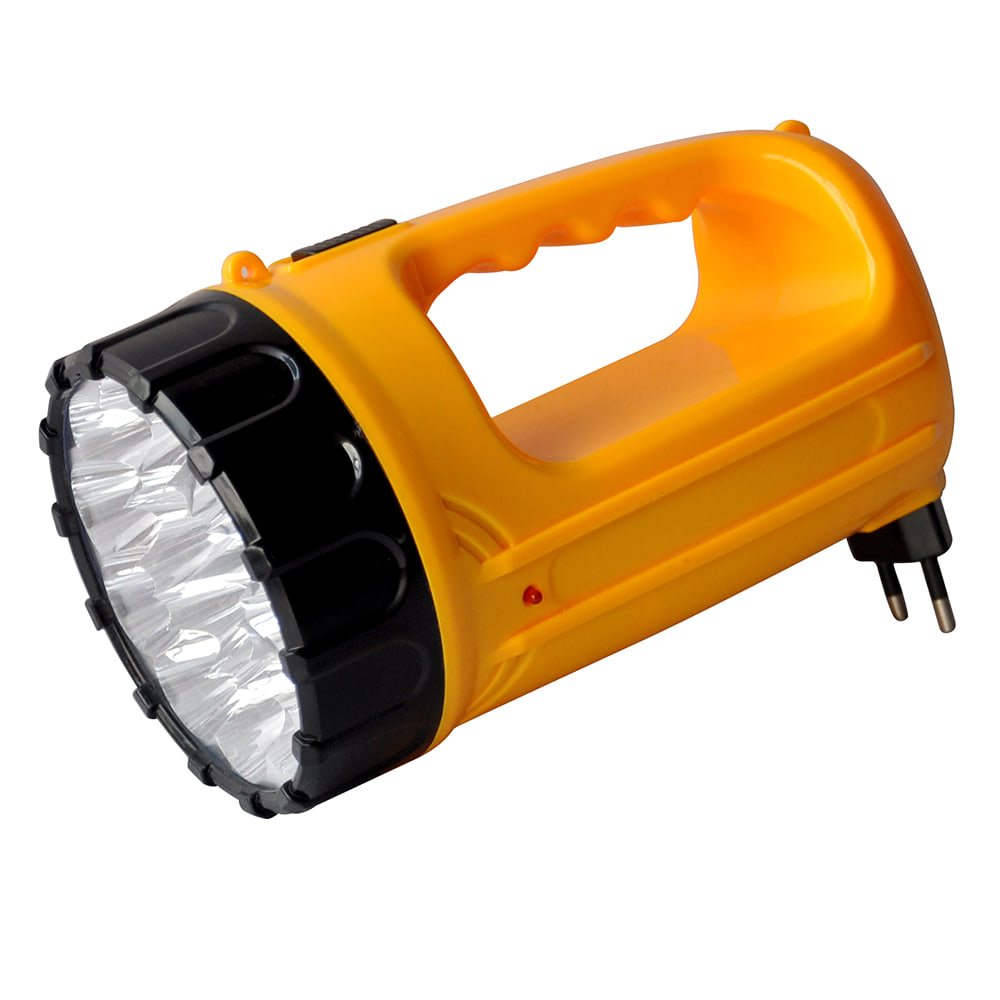
A torch that folds a mains plug into its handle spends its life on a shelf near a socket, trickle-charged and used a few times a year. That duty cycle is exactly what a 4 V sealed lead-acid pack does well: it tolerates permanent float charging, it is cheap, and it is robust against the charging discipline of a real household. The catalogue's Brazil-plug models follow this pattern — AT-615 and AT-611 both run 4 V 1200 mAh lead-acid packs, and AT-189 a 4 V 800 mAh pack, with charging from the built-in two-pin plug.
The trade-off is weight and cycle life. Lead-acid delivers fewer deep cycles than NiMH or lithium and weighs more per watt-hour. For a torch that lives by the fuse box, neither matters. For a torch that travels in a car or a pocket, both do.
The three chemistries side by side
| Property | Sealed lead-acid (4V/6V) | NiMH | Lithium (Li-ion / LiFePO4) |
|---|---|---|---|
| Cost per capacity | Lowest | Middle | Highest |
| Weight per Wh | Heaviest | Middle | Lightest |
| Deep cycles (typical) | Hundreds | More | Most |
| Float / trickle charging | Tolerates permanent float | Tolerant of partial charge, dislikes prolonged over-charge | Needs controlled charging and a protection circuit |
| Cold performance | Capacity drops in deep cold | Moderate | Li-ion drops; LiFePO4 holds better |
| Transport rules | MSDS for freight | MSDS for freight | UN38.3 plus MSDS, SoC limit by air |
Reading capacity honestly: mAh is not the whole story
Capacity in mAh is only comparable at the same voltage. A 4 V 1200 mAh lead-acid pack and a 3.7 V 1200 mAh lithium cell hold different energies; the honest unit is watt-hours — voltage times amp-hours. When a supplier quotes runtime, ask at what LED setting and to what endpoint, because "8 hours" at low beam is a different claim from 8 hours at the 1 W spot.
Charging behaviour and what it means for the plug
Lead-acid tolerates the simple constant charging that a fold-out mains plug provides, which is why the two go together in household torches. NiMH charges happily through a plug or a USB port but wants charging to stop when full. Lithium requires a controlled charge with a protection circuit, which the product must contain regardless of where the power comes from. This is one reason plug-socket torches at low price points are lead-acid while USB-C torches trend lithium or NiMH.
What each chemistry does to your freight bill
- Lead-acid: no UN38.3, but forwarders still request the MSDS, and the weight raises sea freight cost per unit.
- NiMH: no UN38.3, MSDS requested, lighter than lead-acid for the same energy.
- Lithium: UN38.3 test summary for the exact pack, MSDS, state-of-charge limits by air, Class 9 labelling for standalone batteries — but the lightest volumetric load per unit shipped.
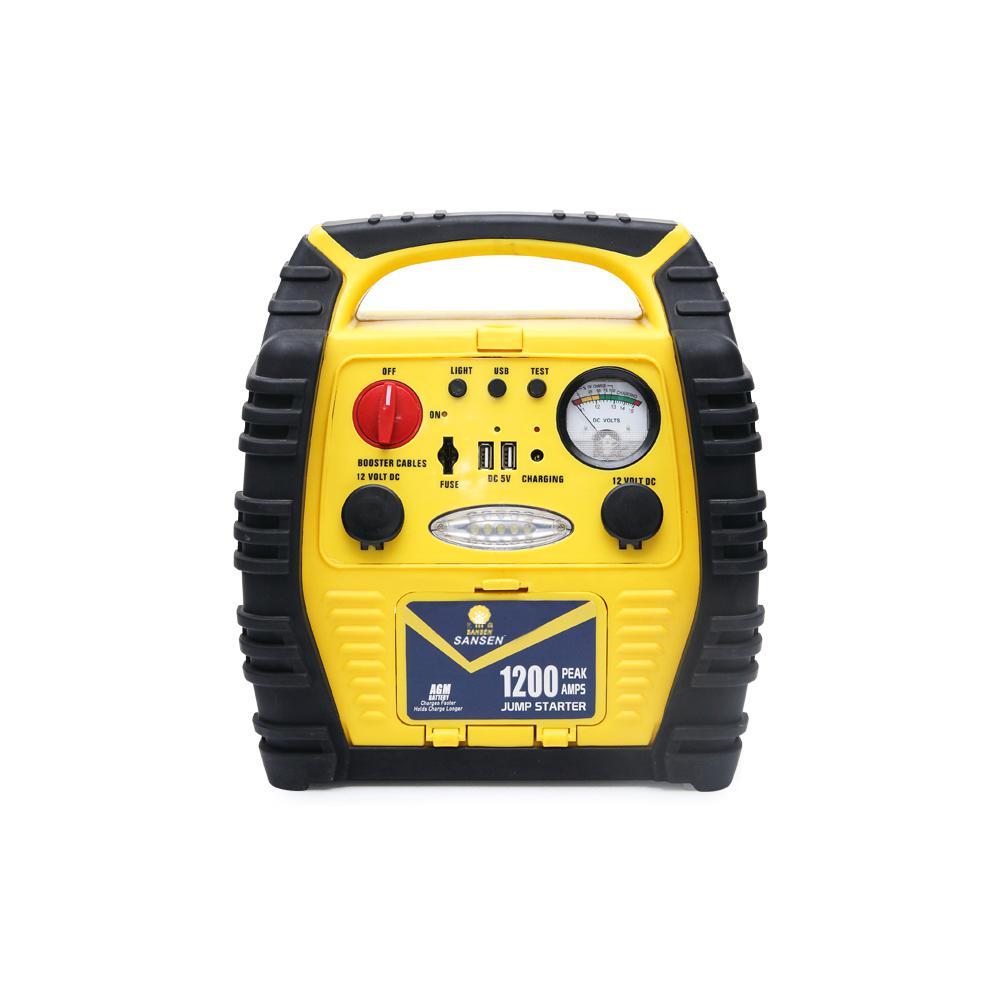
For a mixed container, the chemistry mix decides the document set. A buyer consolidating lead-acid torches with lithium jump starters manages two document tracks; a buyer standardising on one chemistry manages one. That is a real administrative saving on repeat orders.
Choosing by market, not by datasheet
Household and hardware retail in plug-standard markets — Brazil especially — favours the built-in-plug lead-acid torch: cheap, shelf-stable, always charged. Automotive and outdoor channels favour lighter packs and USB charging, where NiMH and lithium make sense. Premium gifting and workshop tools justify lithium. Fix the chemistry before tooling, because the housing, the charging circuit and the printed voltage marking are all downstream of it.